
The ACDC_Q Project: A Bridge from the Laboratory to the Market
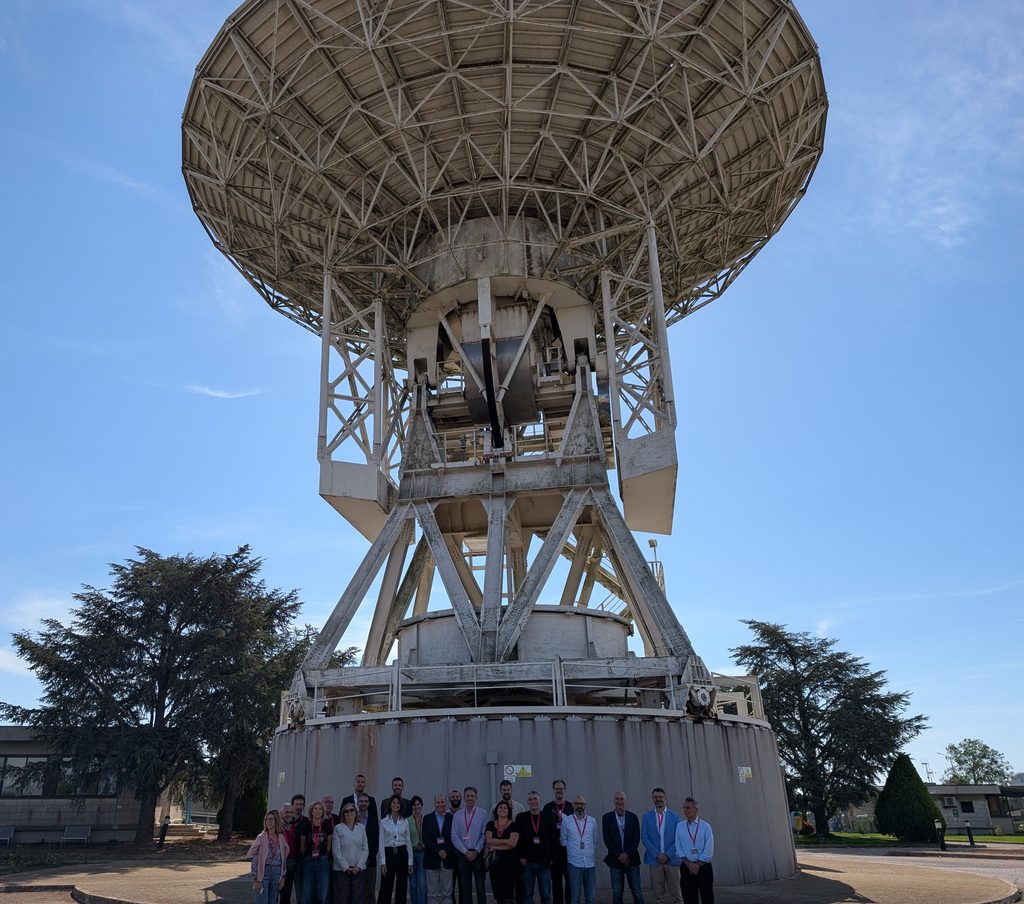
The Italiana National Conference ACDC_Q 2026, “Magnetometers for Space and Emerging Applications”, organized by the Italian Space Agency,presented the results and prospects of an ambitious European project aimed at transforming quantum sensors from laboratory experiments into commercial devices. The project focuses on a highly promising technology: Nitrogen-Vacancy (NV) centers in diamond—controlled defects in the diamond crystal lattice that act as extremely sensitive quantum sensors for magnetic fields.
ACDC_Q’s central goal is to solve two fundamental problems that have so far limited the large-scale adoption of these sensors: the need for cumbersome, expensive hardware, and the difficulty of integrating them with conventional electronics. The project aims to create a fully integrated system that combines the diamond quantum chip with semiconductor circuits, eliminating complex optical alignments and shrinking the setup from a laboratory optical table to a compact, portable device.
A crucial aspect of this evolution is the transition from traditional optical readout (which requires filters, and photodetectors) to direct electrical readout. This pioneering technology converts the quantum state directly into a measurable electrical signal, making the sensor autonomous, programmable, and fully compatible with onboard electronics.
The project has identified three high-strategic-value application scenarios: space magnetometry, non-destructive evaluation of industrial materials, and remote monitoring of critical infrastructure. The Matera conference served as the first major public showcase to demonstrate how ACDC_Q’s goals synergize concretely with diverse Italian research lines.
Concrete Synergies with Italian Research
- Miniaturization: Research groups from the Universities of Bari and Bologna presented solutions to shrink quantum sensors to chip-scale, such as laser-written vapor cells with picotesla sensitivity and ultracold atoms trapped in hollow-core optical fibers. While different from NV centers, these technologies share ACDC_Q’s core philosophy of making quantum tech portable. The expertise developed here can be directly transferred and integrated into the project’s miniaturization pathway.
- Electronic Integration: A contribution from CNR Bologna presented an “all-electrical” quantum sensing technology based on molecular spins integrated directly into conventional electronic circuits. This aligns perfectly with ACDC_Q’s direction: abandoning optical readout to embrace electrical, making sensors compatible with the onboard electronics of satellites, autonomous vehicles, and medical devices.
- Interference Compensation: To use ultra-sensitive magnetic sensors in space or on autonomous vehicles, one must distinguish the useful signal from the “noise” generated by the platform itself. An Italian company presented a real-time magnetic compensation technology already validated on autonomous marine vehicles. This expertise is directly transferable to future ACDC_Q magnetometers destined for CubeSats and planetary rovers.
- Metrology and Certification: INRIM in Turin is developing traceable calibration systems for next-generation magnetometers. This work perfectly complements ACDC_Q’s collaboration with Germany’s PTB, ensuring that quantum sensors are not only highly sensitive but also measurably reliable according to international standards.
Space: An Ambitious Testing Ground
Among the applications identified by ACDC_Q, space magnetometry is perhaps the most strategic. The Matera conference highlighted exactly why Italy is exceptionally well-positioned to lead this frontier.
The NV-diamond sensors developed in the project are ideal for space: they operate at room temperature, are radiation-hard, lightweight, and low-power. They can map planetary magnetic fields, support next-generation satellite navigation systems, and monitor space weather to protect terrestrial infrastructure from geomagnetic storms.
The synergies go even further, opening up broader scenarios:
- GPS-independent navigation based on the quantum detection of magnetic anomalies, which is crucial for lunar and planetary exploration where GPS does not exist.
- CubeSat constellations equipped with distributed quantum magnetometers for continuous monitoring of the space environment.
- Astronaut health monitoring: the same NV-diamond sensors can be used for contactless magnetocardiography, allowing astronauts’ heart activity to be checked in extreme operational conditions.
Beyond Space: High-Impact Cross-Sector Applications
A major strength of ACDC_Q is the versatility of NV-diamond technology. The same sensor developed for space can find applications in completely different sectors, maximizing the return on investment.
- Non-Destructive Evaluation (NDE): In the aerospace and automotive sectors, ACDC_Q sensors will detect structural micro-defects, cracks, or thermal stress without damaging the materials. A capability that today requires expensive, bulky equipment could tomorrow be integrated into portable devices.
- Remote Monitoring of Critical Infrastructure: Bridges, pipelines, and power grids can be monitored in real-time by distributed quantum sensors, detecting magnetic anomalies invisible to traditional sensors.
- Biomedical: Quantum magnetometry is revolutionizing diagnostics, from brain activity mapping (MEG) to cardiac monitoring (MCG) and magnetic nanoparticle tracking for targeted therapies. Once miniaturized, ACDC_Q devices could enter hospitals and even patients’ homes.
European Positioning
ACDC_Q is an active, integrated project capable of connecting basic research, technological development, metrology, and industrial application. It acts as a catalyst that attracts cross-disciplinary expertise, paving the way for:
- Industrial partnerships for device scalability.
- Collaborations for in-orbit and planetary platform testing.
- Synergies with European programs like the Quantum Technologies Flagship, QuantERA, and Horizon Europe.
- Metrological standardization in collaboration with national and European institutes.
A Message for the Future
The journey from the laboratory to the global market is challenging, but the ACDC_Q project has proven that the destination is well within reach. By combining cutting-edge quantum physics with robust semiconductor engineering, we are not just building better sensors; we are laying the foundation for the next generation of space exploration, industrial safety, and medical diagnostics. The future of quantum sensing is compact, integrated, and ready for the real world—and ACDC_Q is proudly leading the way.